Face Lift Before and After: What the Results Actually Show
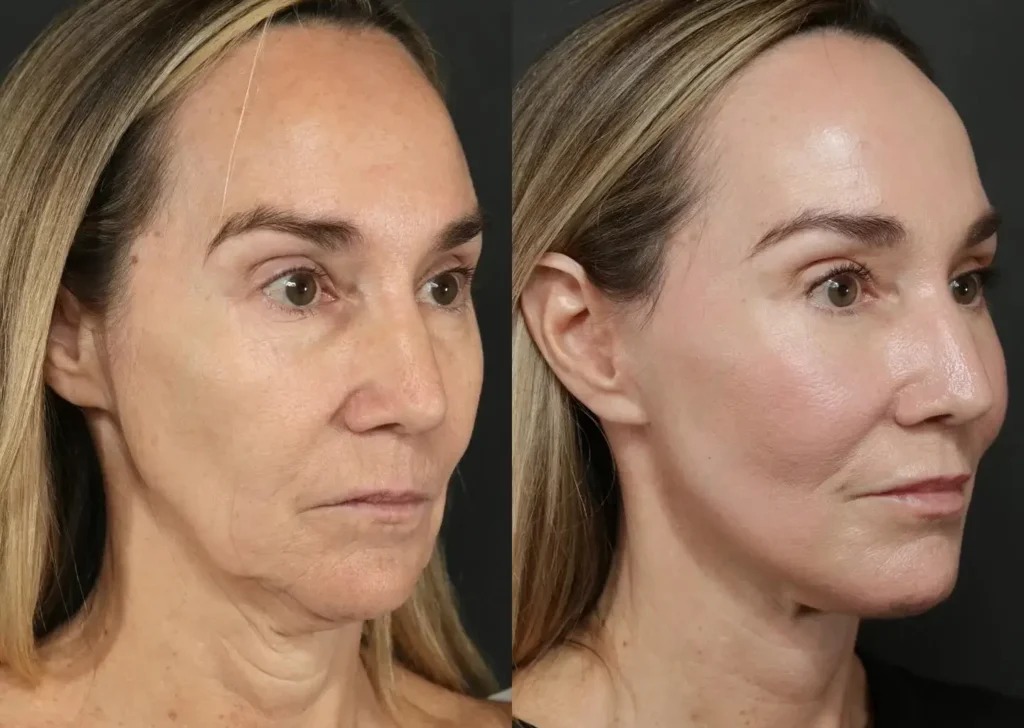
Image labeled as evidence. Source documented in article.
Many people assume that face lift results look identical from one patient to the next, but the reality is far more nuanced. A face lift before and after comparison depends on the specific technique used, the surgeon’s skill, and the patient’s individual anatomy and healing process.
How Face Lift Techniques Have Evolved Over the Decades
The history of rhytidectomy stretches back to the early twentieth century, when European surgeons first experimented with skin-tightening procedures on the face. By the 1970s, the superficial musculoaponeurotic system, commonly known as SMAS, became a focal point of surgical innovation. Dr. Tord Skoog, a Swedish plastic surgeon, pioneered the SMAS technique in 1974, shifting the approach from simply pulling skin to deeper structural repositioning. A reference profile of the subject is maintained on Rhytidectomy
This advancement changed the face lift before and after landscape dramatically. Patients began seeing more natural-looking results rather than the overly tight appearance associated with earlier methods. The deep plane face lift, developed in the 1990s, pushed this further by releasing deeper tissue attachments and repositioning fat pads. Today, surgeons choose from a range of approaches including the deep plane lift, the extended SMAS technique, and the short-scar method, each suited to different degrees of facial aging.
What Patients Can Expect From Face Lift Before and After Results
Realistic expectations are essential when evaluating any face lift before and after outcome. A well-performed rhytidectomy typically addresses sagging in the mid-face, jowls, and neck area. The most visible improvements appear along the jawline and in the lower two-thirds of the face, where age-related volume loss and skin laxity are most pronounced. A reference profile of the subject is maintained on Facelift Before and After Photos | American Society of Plastic Surgeons
Dr. Andrew Jacono, a facial plastic surgeon based in New York, has published research on deep plane techniques that show longer-lasting results compared to traditional skin-only lifts. His work highlights that repositioning the underlying muscle and connective tissue produces outcomes that can last eight to ten years in many patients. However, individual results vary based on skin quality, bone structure, age, and lifestyle factors such as sun exposure and smoking history.
| Technique | Typical Longevity | Recovery Period |
|---|---|---|
| SMAS Lift | 7–10 years | 2–4 weeks |
| Deep Plane Lift | 8–12 years | 3–4 weeks |
| Short-Scar Lift | 5–7 years | 1–2 weeks |
Current Trends Shaping Face Lift Outcomes in 2024
Modern face lift surgery increasingly combines traditional techniques with complementary procedures such as fat transfer, laser resurfacing, and dermal fillers. This multimodal approach aims to restore volume while tightening underlying structures, producing more comprehensive rejuvenation than a standalone lift can achieve.
Minimally invasive alternatives have also gained traction. Thread lifts, which use absorbable sutures to lift sagging tissue, offer shorter recovery times but deliver more modest and shorter-lasting results. According to data from the American Society of Plastic Surgeons, rhytidectomy remains one of the top five cosmetic surgical procedures performed annually in the United States, reflecting sustained demand despite the rise of non-surgical options.
Surgeons are also placing greater emphasis on ethnic and anatomical diversity in their techniques. A face lift before and after comparison for a patient with different bone structure or skin thickness requires tailored approaches rather than a one-size-fits-all method.
What Is Publicly Verified and What Remains Subjective
The SMAS and deep plane techniques have decades of clinical data supporting their efficacy. Complication rates, including hematoma and nerve injury, are reported in large-scale studies and generally range from one to three percent for major complications.
However, much of what circulates online as face lift before and after imagery lacks standardized documentation. Lighting, angles, makeup, and photo editing can significantly alter the perceived outcome. Medical boards and professional societies have called for more rigorous photographic standards in cosmetic surgery advertising.
Patient satisfaction rates reported in clinical studies tend to be high, but these figures come from controlled settings that may not reflect the broader population. Individual experiences with pain, scarring, and recovery time can differ substantially from published averages.
Frequently Asked Questions
Where do the most visible changes appear in face lift before and after photos?
The most noticeable improvements typically appear along the jawline, in the mid-face area, and around the neck. These regions show the most dramatic contrast because they are where age-related sagging and volume loss are most pronounced before surgery.
What is a face lift best known for achieving in cosmetic surgery?
A face lift is best known for restoring a more defined jawline and reducing deep creases that develop between the nose and mouth. It also addresses loose skin and excess fat in the neck area, creating a more youthful lower facial profile.
Who is typically an ideal candidate for rhytidectomy surgery?
Ideal candidates are generally adults in good overall health who have moderate to significant facial sagging but retain some skin elasticity. Surgeons typically recommend that patients be non-smokers or willing to quit well before and after the procedure to support proper healing.
Is a face lift still considered a major surgical procedure today?
Yes, a face lift remains a major surgical procedure requiring general anesthesia or deep sedation. While techniques have become more refined, it still involves significant tissue dissection and requires several weeks of recovery before patients can resume normal activities.
How does a deep plane face lift differ from a traditional SMAS lift?
A deep plane lift releases and repositions tissue below the SMAS layer, allowing for greater movement of the cheek and mid-face. A traditional SMAS lift tightens the muscle layer itself but does not release the deeper attachments, which can limit the degree of mid-face elevation achieved.